

Teeth Cleaning in Barrie
Good brushing and flossing do most of the work of keeping teeth healthy, but not all of it. A professional teeth cleaning at BL Dentistry in Barrie, Ontario takes care of what home care leaves behind, and it is the appointment most patients book more than any other.
What Brushing Misses
Plaque is a soft, sticky film of bacteria that forms on teeth every day. A toothbrush and floss clear most of it, but a little always remains in the hard-to-reach spots: behind the lower front teeth, around the back molars, and just under the edge of the gums.
Plaque that stays in place starts to harden within a few days. Minerals from saliva turn it into tartar, also called calculus, which bonds firmly to the tooth. At that point it no longer brushes off. It also gives new plaque a rough surface to cling to, so it keeps building.
Tartar along the gumline matters most. The bacteria living in it irritate the surrounding gum tissue, and that irritation is how gum disease begins.
What Happens During a Cleaning
A typical appointment follows a few steps.
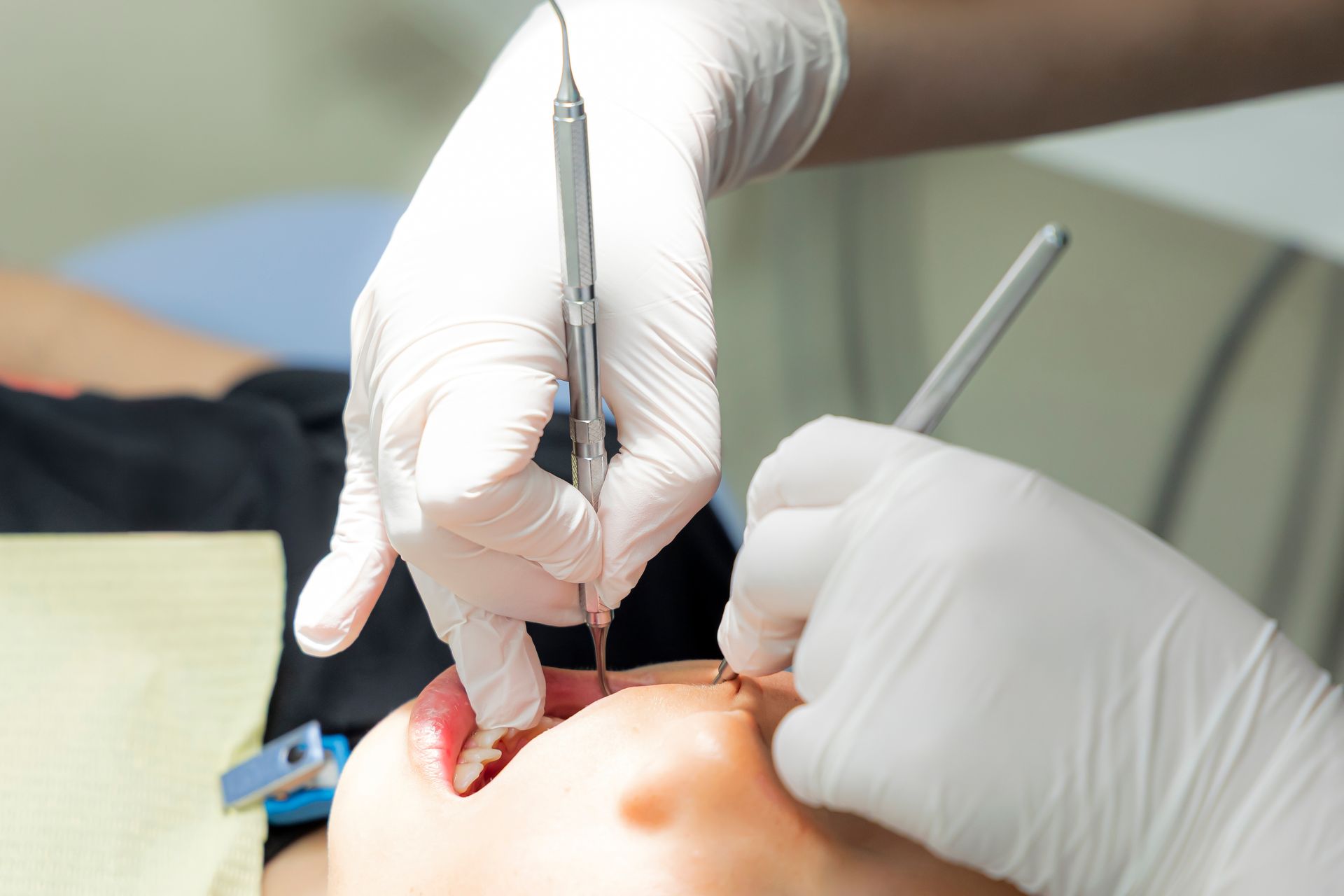
Scaling
Tartar is removed from every tooth surface, with particular attention to the gumline and the spaces between teeth. This can be done with fine hand instruments, an ultrasonic scaler that uses vibration and water to break deposits loose, or both.

Polishing
Once the tartar is gone, the teeth are polished with a gritty paste. This smooths the surfaces so plaque has a harder time sticking, and it lifts some surface staining along the way.

Flossing and Review
A final floss clears anything left between teeth. It is also a good moment to point out areas that need more attention at home, so your next cleaning has less to remove.

Cleanings and Exams Go Together
A cleaning and an exam are usually booked as one visit, and the two support each other. With the teeth clean, it is easier to spot early decay, small cracks, and changes in the gums. Our general dentistry page covers what the exam half of the appointment looks at.
A cleaning is also the right first step before cosmetic treatment. Professional teeth whitening works more evenly on teeth that are free of buildup. For an overview of the clinic, visit the BL Dentistry home page.
Frequently Asked Questions
How long does a teeth cleaning take?
A routine cleaning commonly takes 30 to 60 minutes. Appointments run toward the longer end when there is heavier tartar buildup, or when it has been a long time since the last cleaning.
Does a cleaning hurt?
For most people it does not. Healthy gums handle a cleaning with little more than pressure and the sound of the instruments. Gums that are already inflamed can feel tender, and areas with exposed roots may be sensitive to cold water from the scaler. Mention any sore spots at the start.
Can I remove tartar myself at home?
No. Once plaque hardens into tartar it is bonded to the tooth and takes a dental scaler to remove. Scraping tools sold for home use can scratch enamel and cut the gums, which creates new problems instead of solving the old one.
What is the difference between a regular cleaning and a deep cleaning?
A regular cleaning works above and just under the gumline. A deep cleaning, called scaling and root planing, reaches further down into gum pockets deeper than about 4 millimetres to clear tartar from the root surfaces. It is used when gum disease has already started and is often done in sections.
Will a cleaning remove stains?
Polishing removes some surface staining from coffee, tea, and tobacco, so teeth often look brighter afterward. It does not change the natural shade of the tooth. For that, whitening is the treatment designed to lighten colour.